
Danger Threats
The 11 Danger Threats are utilized to qualify and/or identify present and impending danger.

Unexplained or Inconsistent Injury
Child has a serious illness or injury (indicative of child abuse or neglect) that is unexplained, or the parent/legal guardian or caregiver explanations are inconsistent with the illness or injury. This refers to serious injury which parent/legal guardian or caregivers cannot or will not explain. While this is typically associated with injuries, it can also apply when family conditions or what is happening is bizarre and unusual with no reasonable explanation. Generally, this will be a danger threat used only at present danger. One example is the following: A child has sustained multiple injuries to their face and head and the parent/legal guardian cannot or will not explain the injuries and the child is very young or non-verbal. The parent(s)’ explanation changes over time as to how the injury or illness occurred.

Hazardous Conditions
The physical living conditions are hazardous and a child has already been seriously injured or will likely be seriously injured. The living conditions seriously endanger a child’s physical health. This threat refers to conditions in the home which are immediately life threatening or seriously endangering a child’s physical health (e.g., people discharging firearms without regard to who might be harmed; the lack of hygiene is so dramatic as to cause or potentially cause serious illness). Examples may include but are not limited to:
-
The child’s living condition is an immediate threat to the child’s safety as there are drugs in baggies on the living room coffee table that are easily accessible to the child and the child is not consistently supervised.
-
Living condition in the home has caused the child to be injured, such as digesting toxic chemicals and/or material and the child requires immediate medical attention.
-
Home has no exit and child is vulnerable, unable to access an exit and dependent on parent/legal guardian who has not or will not act.

Whereabouts Unknown/Avoid/Flee
There are reports of serious harm and the child’s whereabouts cannot be ascertained; and/or there is a reason to believe that the family is about to flee to avoid agency intervention; and/or the family refuses access to the child; and the reported concern is significant and indicates serious harm. This threat refers to situations in which the location of the family cannot be determined, despite diligence by the agency to locate the family. The threat also refers to situations where a parent/legal guardian/caregiver refuses to see or speak with agency staff and/or allow agency staff to see the child, is openly hostile or physically aggressive toward the investigator or case manager, is avoiding staff, refuses access to the home, hides the child, or refuses access to the child and the reported concern is significant and indicates serious harm. The hiding of children to avoid agency intervention should be thought of in both overt and covert terms. Information, which describes a child being physically confined within the home or parents who avoid allowing others to have personal contact with the child, can be considered “reported concern is significant and indicates serious harm.”
-
The act of physically restraining a child within the home might be a maltreatment of bizarre punishment or physical injury, and would indicate use of this danger threat.
-
The threat is qualified by the allegation of maltreatment, information from prior case history and current reports regarding the child. There should be concern for present or impending danger based upon information provided to the agency that would result in serious harm to the child. Generally, this will be a danger threat used only at present danger.

Basic Medical Needs
Parent/legal guardian or caregiver is not meeting the child’s essential medical needs and the child is/has already been seriously harmed or will likely be seriously harmed. This refers to medical care that is required, acute, and significant such that the absence of care will seriously affect the child’s health. “Essential” refers to specific child conditions (e.g., blindness, physical or developmental disability, medical condition) which are either organic or naturally induced as opposed to parentally induced. The parents will not or cannot address the child’s essential needs. Examples may include but are not limited to:
-
There is an emergent quality about the required care.
-
Child has Type 1 diabetes and is unable to self-administer his/her medication and the parent/legal guardian or caregiver has not been administering medication to ensure child safety.

Child's Emotional Symptoms
Child shows serious emotional symptoms requiring intervention and/or lacks behavioral control and/or exhibits self-destructive behavior that parent/legal guardian is unwilling or unable to manage. This refers to specific deficiencies in parenting that result in the exceptional child being unsafe. The status of the child helps to clarify the potential for severe effects. Clearly, exceptional includes physical and mental characteristics that result in a child being highly vulnerable and unable to protect or fend for him or herself. Examples may include but are not limited to:
-
Present danger considerations are focused both on the child’s emotional needs and the parent/legal guardian or caregiver ability to meet those needs. Child’s emotional symptoms are serious in that they pose a danger to others or themselves. This could include self-harming, fire-setting, or sexual acting-out on others. Parent/legal guardian or caregiver response places the child in present danger.
-
Child that requires acute psychiatric care due to self-harming behavior that the parent/legal guardian will not or cannot meet despite the resources and ability to attend to the child’s needs.


Violent/ Impulsive/ Acting Dangerously
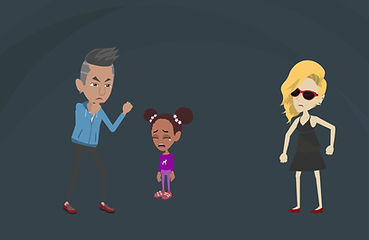
Parent/legal guardian or caregiver is violent, impulsive, or acting dangerously in ways that seriously harmed the child or will likely seriously harm to the child. Violence refers to aggression, fighting, brutality, cruelty, and hostility. It may be regularly active or generally potentially active. This threat is concerned with self-control. It is concerned with a person’s ability to postpone; to set aside needs; to plan; to be dependable; to avoid destructive behavior; to use good judgment; to not act on impulses; to exert energy and action; to inhibit; and/or to manage emotions. This is concerned with self-control as it relates to child safety and protecting children. So, it is the absence of caregiver self-control that places vulnerable children in jeopardy.
-
When violence includes the perpetrator dynamics of power and control it is considered “intimate partner violence.” Physical aggression in response to acts of violence may be a reaction to or self-defense against violence.
-
Impulsive means that one does not think before one acts. It may mean that a person blurts things out or take actions without thinking about the consequences. Impulsivity (or impulsiveness) involves a tendency to act on a whim, displaying behavior characterized by little or no forethought, reflection, or consideration of consequences. Impulsive actions typically are poorly conceived, prematurely expressed, unduly risky, or inappropriate to the situation that often result in undesirable consequences, which make long term goals and strategies for success more difficult. Individuals suffering from an impulse control frequently experience five stages of symptoms: compelling urge or desire, failure to resist the urge, a heightened sense of arousal, succumbing to the urge (which usually yields relief from tension), and potential remorse or feelings of guilt after the behavior is completed. Impulsivity appears to be linked to all stages of substance abuse and is also linked to sexual abuse.
-
Parents/legal guardian or caregiver may be behaving in violent or dangerous ways; however, this is intended to capture a more specific type of behavior. Examples may include but are not limited to:
-
Child has experienced sexual abuse and/or exploitation and perpetrator has ongoing access.
-
Parent/legal guardian or caregiver is described as physically/verbally imposing/threatening, brandishing weapons, known to be dangerous and aggressive, currently behaving in attacking or aggressive ways.
-
Careful consideration when determining present danger should be made when assessing domestic violence and family violence. The parent/legal guardian or caregiver may not be “actively” violent in the presence of the child welfare professional; however, the domestic violence dynamics within the household are occurring. In addition, there should be consideration of information that indicates that a child and spouse are being mistreated. Concerns are heightened when abuse of a child and spouse are both occurring.

Basic Needs
Parent/legal guardian or caregiver is not meeting child’s basic and essential needs for food, clothing and/or supervision, AND child is/has already been seriously harmed or will likely be seriously harmed. “Basic needs” refers to the family’s lack of minimal resources to provide shelter, food, and clothing or the capacity to use resources to provide for a minimal standard of care if they were available. Examples may include but are not limited to:
-
For present danger, consideration of the parent/legal guardian or caregivers who are unable or unwilling to provide for food, clothing, and/or supervision. The parent/legal guardian or caregiver may be currently intoxicated and/or unavailable, thus leaving the child without supervision when the child is not able to protect themselves.
-
Child is found unsupervised in a dangerous condition, such as being left wandering the streets. There is no parent/legal guardian or caregiver that is currently providing for supervision of the child.
-
Lack of essential food, clothing, and/or supervision that result in child needing acute medical care due to the severity of the present danger.
-
Hospitalized child due to non-organic failure to thrive an unexplained illness.

Threats of Harm
Parent/legal guardian or caregiver is threatening to seriously harm the child, or is fearful he/she will seriously harm the child. This refers to caregivers who express anxiety and dread about their ability to control their emotions and reactions toward their child. This expression represents a “call for help.” Examples may include but are not limited to:
-
At present danger, this refers to parents/legal guardian or caregivers who express intent and/or desire to harm their child.
-
Parent/legal guardian or caregiver may have a history of harming children in the past and has identified a need for intervention due to their fear of harming their child. Intent should be considered for present danger, in addition access and ability to harm child.

Views/ Acts Negatively
Parent/legal guardian or caregiver views child and/or acts toward the child in extremely negative ways AND such behavior has or will result in serious harm to the child. “Extremely” is meant to suggest a perception which is so negative that, when present, it creates child safety concerns. For this threat to be identified, these types of perceptions must be present and the perceptions must be inaccurate.
-
This is the extreme, not just a negative attitude towards the child. It is consistent with seeing the child, as demon possessed, evil, and responsible for the conditions within the home.
-
Consideration of parent/legal guardian or caregiver’s viewpoint of the child as being in action for present danger.

Other
This category should be used rarely. Consultation with and approval by a supervisor must occur to determine that the threat identified is not covered in any of the standard danger threat definitions. Documentation should accurately describe the threat, including the threshold qualifiers.

Intent & Willful Act
Parent/legal guardian/caregiver’s intentional and willful act caused serious physical injury to the child, or the caregiver intended to seriously injure the child. This refers to caregivers who anticipate acting in a way that will result in pain and suffering. “Intended” suggests that, before or during the time the child was mistreated, the parents’/primary caregivers’ conscious purpose was willfully to act in a manner which would reasonably hurt/harm the child. This threat must be distinguished from an incident in which the parent/legal guardian or caregiver meant to discipline or punish the child, and the child was inadvertently hurt. Examples may include but are not limited to:
-
Actions directed at the child to inflict injury; parent/legal guardian or caregiver shows no remorse for the injuries. Initial information supports that the injuries/child’s condition is a result of the deliberate preconceived planning or thinking which the parent/legal guardian or caregiver is responsible. Serious injury locations for present danger should be considered when located on the face/head/neck. Child’s injuries may or may not require medical attention.
-
Bone breaks, deep lacerations, burns, inorganic malnutrition, etc. characterize serious injury.
-
Children that are unable to protect themselves have sustained a physical injury because of the parent/legal guardian or caregiver intentional and willful act. Could include parent/legal guardian or caregiver who used objects to inflict pain.